Multifamily and Public Housing Security
The Cameras Went In After the Last Incident. Nobody Has Watched Them Since.
Resident safety is your mandate, your political exposure, and the thing you have the least capacity to deliver. Coverage shouldn’t require a guard force you can’t fund.
Who This Is For
This is for the Executive Director of a housing authority or the Director of Property Management for a large multifamily portfolio, and for the board or ownership group answering to residents, funders and the press.
You have the hardest version of this problem: a distributed property, a population you’re accountable to rather than screening, and a budget that moves on grant cycles rather than need.
Where the Model Breaks
Your camera system was bought reactively and monitors nothing. It was installed after an incident, aimed where the last thing happened, and is watched by no one. It documents rather than prevents, and residents know the difference.
Coverage is episodic because guards are unaffordable. Patrols happen when there’s money for patrols. Between them, breezeways, parking, laundry rooms and common areas are uncovered. Residents experience that as being unprotected, because they are.
You need documentation for four audiences. Police coordination, lease enforcement, litigation defense and grant reporting each need an evidence standard your current system can’t meet without days of manual work.
The property is distributed. The incidents aren’t. Coverage is spread evenly across buildings, while incidents concentrate in a handful of locations and hours you could name from memory and have never been able to staff.
Get the approach wrong and you make it worse. Residents can experience security technology as policing of their own homes. A deployment that damages trust is worse than none, and that’s not a communications problem you can fix afterward.
Community Trust Is a Design Requirement
In resident housing, trust isn’t a PR exercise. Any system residents experience as surveillance of them rather than protection for them will fail, politically first and then operationally. That’s why the boundaries below are published before deployment, not developed after the first complaint.
What NXTFusion OS™ Brings
NXTSensorHub: see everything. The ownership-agnostic connection layer takes in the cameras, access control and operational systems you already own alongside the sensors we bring. No rip-and-replace, no vendor lock on the sensing tier.
Nexie: miss nothing. The AI Operator watches every connected feed continuously, correlates across them, and hands your team a characterized incident instead of another alarm.
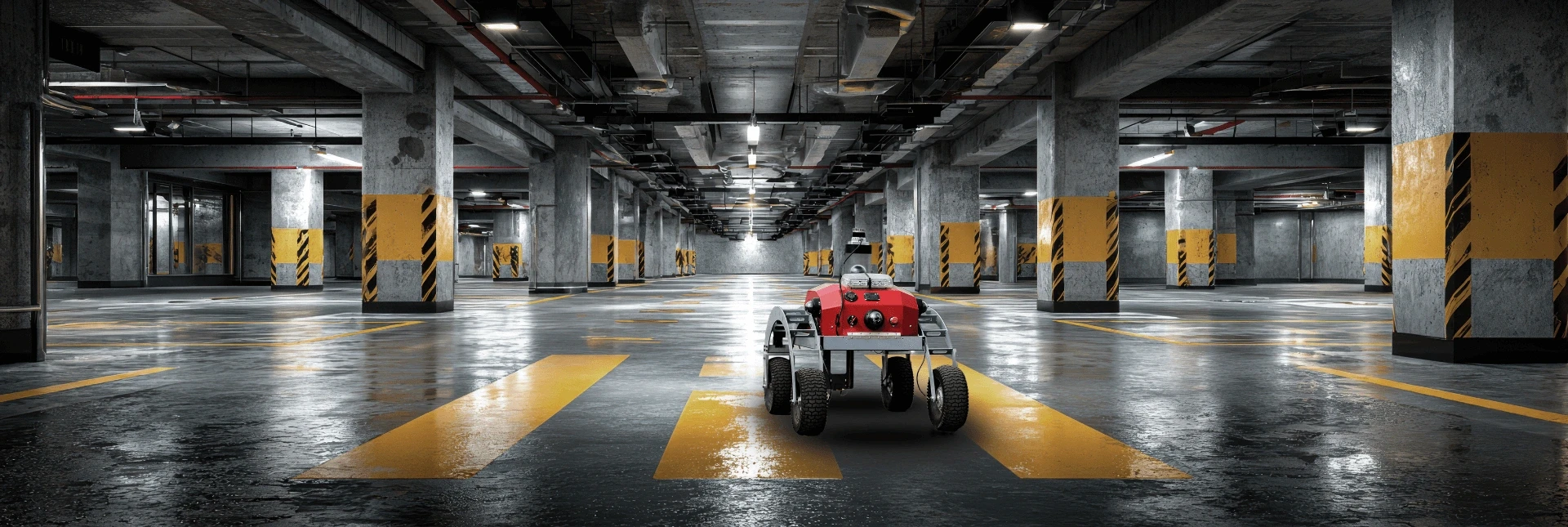
Autonomous security assets as a service: respond. Mobile autonomous assets such as NXTGuard go where fixed coverage is thin and are repositioned as conditions change. They’re delivered as an operating expense rather than a capital project.
Governance, Published to Residents
AI Assist: Nexie detects and prioritizes activity in common areas and parking and drafts the incident record. Staff decide. Nothing is automated against a resident.
AI Orchestration: Nexie sequences the response. It repositions the asset, cues the camera, notifies on-call staff and opens the log, putting coverage where and when incidents actually happen.
Red lines: No facial recognition. No identity determination. No autonomous contact with any person. No monitoring of unit entrances or interior residential space. Published to residents, not assumed.
A Week on the Property
23:00 · Parking: Persistent coverage of resident parking during the hours vehicle burglary and confrontation actually happen, without a guard post you can’t fund.
01:30 · Common area: Breezeways, laundry and community space between buildings, the places residents name when you ask where they feel unsafe.
03:00 · Known hot spot: Coverage concentrated where your incident history says it belongs, not spread evenly for the appearance of fairness.
Incident: A characterized record with evidence attached, ready for police coordination or lease enforcement without a week of manual reconstruction.
Grant cycle: Documented coverage and outcome data to support the next funding application. That’s how this becomes sustainable rather than a one-time purchase.
Direct Precedent: Alameda Housing Authority
NXT operates today at Alameda Housing Authority, with sustained autonomous overnight patrol across a large distributed residential property. That’s your environment, your population and your funding model, not an analogue borrowed from a stadium. Ask us to put you in touch with them.
Where It Already Runs
Alameda Housing Authority: The direct precedent. Sustained autonomous overnight patrol across a large distributed residential property under a public housing mandate.
USCG Alameda: Persistent patrol in a federal operating environment with formal access control and documented evidence expectations.
San Diego International Airport employee lot: Access-controlled coverage under federal-adjacent scrutiny, where documentation standards are audited rather than assumed.
Snapdragon Stadium and Petco Park: Large distributed footprints with assets repositioned by conditions, the coverage economics that scale to a multi-building property.
What a Phased Deployment Looks Like
Phase 1: Resident engagement first, then one property. Published boundaries and a community session come before any asset arrives. This sequence isn’t optional.
Phase 2: Sixty-day baseline. Coverage is concentrated on your known hot spots, and incident and outcome data is captured for both operations and the next funding application.
Phase 3: Portfolio expansion. Coverage extends across properties as grant and operating funding allow, with documented outcomes carrying the case forward.
Frequently Asked Questions
Does NXT use facial recognition on residents?
No. The published red lines are no facial recognition, no identity determination, no autonomous contact with any person, and no monitoring of unit entrances or interior residential space.
Where has NXT deployed in public housing?
NXT operates today at Alameda Housing Authority, with sustained autonomous overnight patrol across a large distributed residential property.
Can the records support grant reporting and lease enforcement?
Yes. Nexie produces a characterized incident record with evidence attached for police coordination or lease enforcement, plus documented coverage and outcome data for funding applications.
How does a deployment start?
With resident engagement: published boundaries and a community session before any asset arrives, then a 60-day baseline on one property’s known hot spots.
Next Step
Start with a conversation with Alameda Housing Authority about what their deployment has actually produced, then a resident-engagement plan for one of your properties. Engagement first, assets second.